How to tell whether your development need has a funding direction
In manufacturing, everything usually starts with a practical need: equipment, energy, water, quality, losses, data, CO₂, by-products or a new product.
The short initial assessment does not require a programme name. The company registration number, the main need and the desired outcome are enough to see whether the direction should be clarified, researched further or not pursued through the wrong funding route.
A company rarely starts with a “project”. It starts with a need.
In a manufacturing company, the question seldom begins with a neatly formulated project idea. Far more often it starts in plain terms: new equipment is needed, losses must come down, quality needs tighter control, water or wastewater has to be sorted out, energy consumption should drop, by-products could be used, the CO₂ topic needs clarity, or a data-driven solution should be introduced.
These are practical needs. Some of them can become a fundable development direction — but only when it is clear what problem is being solved, what the gain will be, how it can be backed by data, and whether a suitable funding instrument or partner logic exists for that direction.
There are many programmes. That does not mean they all fit.
European and international instruments offer a range of routes — Horizon Europe, CBE JU, LIFE, Eurostars/Eureka, EIT Food, EIC, as well as cascade/FSTP instruments. Some of these come with substantial support intensity, broader consortia and the opportunity to test or demonstrate new approaches.
Programmes on their own, however, do not answer a company's question. What matters is not the list of programmes, but the company's need — the very same need can lead to completely different routes: a national instrument, a small pilot, a technology partnership, a consortium, or the honest conclusion that funding is not the right starting point at this stage.
Horizon Europe
Larger collaborative projects when the topic addresses a challenge of European scale.
CBE JU
Bioeconomy, food side streams, bio-based solutions and biorefinery thinking.
LIFE
Environment, climate, energy, emission reduction and demonstration-driven approaches.
Eurostars / Eureka
Company-led development projects with an international technology partner.
EIT Food
Food innovation, piloting and structured collaboration formats.
Cascade / FSTP instruments
Smaller pilots, testing, digitalisation, AI and data, production improvements.
These are examples of possible routes, not a promise that a particular programme will suit every company.
Where project logic tends to appear in a food or manufacturing company
Energy consumption
When the goal is not simply “a lower bill”, but a measurable efficiency, data or demonstration case that can be substantiated.
Water and wastewater
When the issue relates to pollution load, pre-treatment, monitoring or more efficient use of resources.
Production losses
When losses can be linked to quality control, sensors, data, automation or process stability.
By-products
When residual streams could become a valuable raw material, a new product or a circular economy direction.
CO₂ and decarbonisation
When equipment is not just a purchase, but part of a broader emission reduction or demonstration solution.
Packaging
When the topic touches circularity, food contact materials, new materials or the supply chain.
Digitalisation and data
When data helps to measure, manage or improve production, rather than being collected for its own sake.
New product or pilot
When the company needs testing, validation, partners or a development stage before wider rollout.
No trade secrets are needed at this stage
01 · What you do not share
No formulas, customer lists or detailed technological know-how.
02 · What is enough
Context is enough: the need, the approximate scale, the constraints and the desired gain.
03 · How it continues
If a deeper assessment is needed later, information exchange can be arranged under a confidentiality agreement with clear data boundaries.
What can happen after the initial assessment
The aim is not to jump straight into writing an application, but to understand which direction is sensible at all.
01
The topic is not a fit for funding right now
Even this conclusion can save a great deal of time.
02
A short clarifying conversation is needed
Sometimes only a few essential details are missing to see whether the direction is worth pursuing.
03
The idea needs to be reframed
The company's need may be clear internally, yet not stated clearly enough in funding terms.
04
A partner route should be explored
In several international instruments, a single company is not the right format.
05
A better call should be awaited
Not every good intention matches the deadlines currently open.
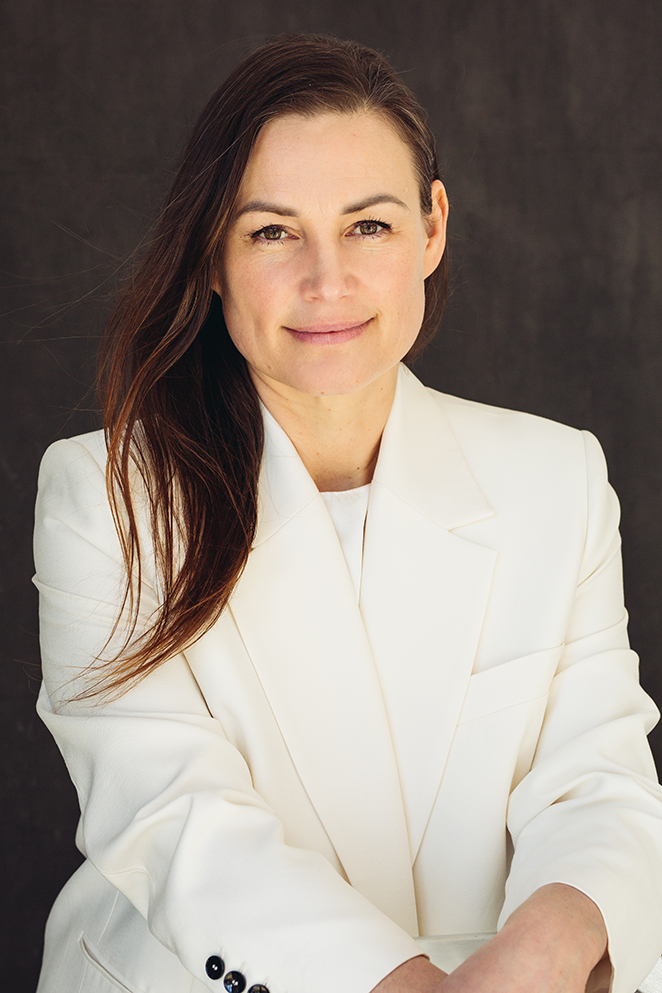
Why discuss this with Diana
Diana Skudra-Jaskule has spent more than 20 years working at the intersection of business, finance, development and project environments. The point here is not simply to name a programme. It is to bring together the company's need, the logic of funding, potential partners and the next steps — so that a complex topic becomes clear to management and usable inside the company.
- experience across business, finance and development projects;
- work with company development plans, funding directions and partnership opportunities;
- an ability to turn complex matters into clear, workable systems;
- a practical approach: from the company's need towards a possible project direction, not from a list of programmes towards an artificial idea.
This approach helps you start with a clear development question rather than a randomly chosen grant name.
If your company has a development plan, start with the short assessment
Two short steps: registration number, main need and desired outcome. It is not a grant guarantee and not an application — it is an early filter so you do not spend time on the wrong funding route.